I Came for R Tutorials; I Left with a Research Career
Where it started
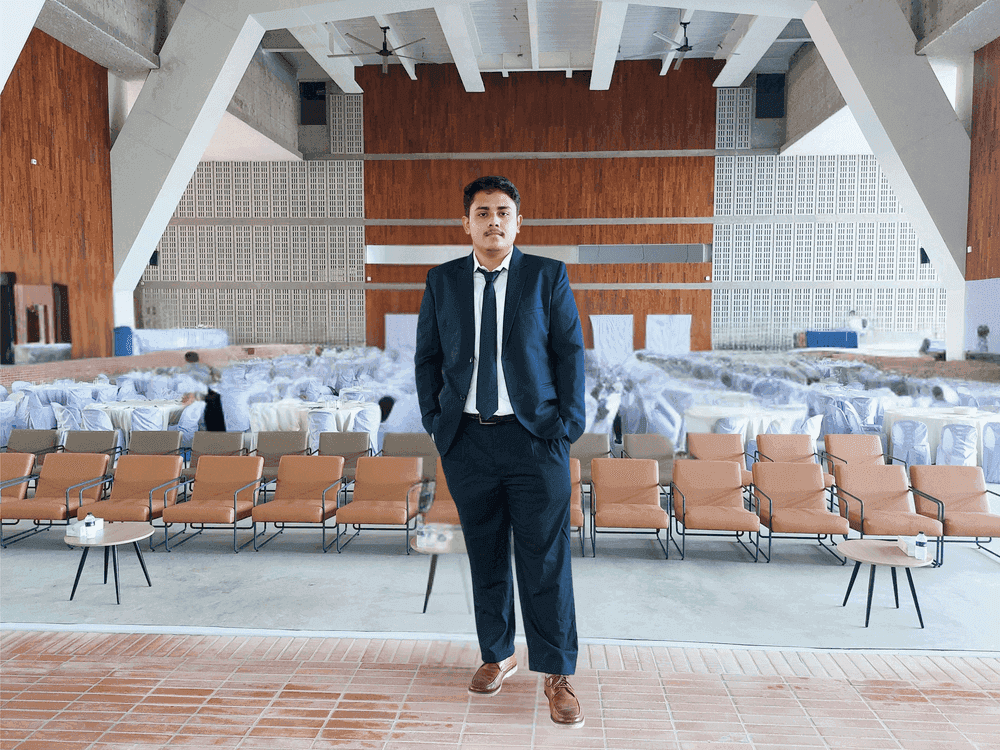
I am Sabbir Khan, a fifth-year intern doctor of veterinary medicine (DVM) student at Gazipur Agricultural University (GAU), Bangladesh, and a research assistant at the Molecular Biology and Bioinformatics Laboratory (MBBL). My research sits at the intersection of veterinary microbiology, genome sequencing, and antimicrobial resistance fields, where wet lab work and computational analysis are both necessary. For a long time, the computational side felt just out of reach.
I remember sitting with R documentation open on one screen and Stack Overflow on another, going in circles. There was not much beginner-friendly material in online spaces that spoke to someone coming from a veterinary biology background. Then I came across Md. Jubayer Hossain's YouTube channel. I worked through his R tutorials, started to feel like the code was making sense, and thought, I want to learn directly from this person someday. That ambition found its path through the GSA Bioinformatics Internship Program, and the experience went well beyond what I had imagined.
The mentorship that changed how I think
Working under Md. Jubayer Hossain's supervision was not just about acquiring techniques. It changed how I approach a research problem. He consistently pushed us to slow down and ask the following: "What is the biological question here? What does this output actually mean?" That sounds simple, but for someone new to computational workflows, the temptation is to run the pipeline and trust the numbers. He trained us out of that habit.
When I encountered errors in data analysis pipelines, and there were many, he did not just give me the fix. He helped me understand why it broke, so I could recognize the same class of problem in a different form later. That kind of mentorship is rare. His willingness to share his interpretation of biological data, not just the methods but the reasoning behind them, gave me a framework I now use in my own research work at GAU.
Beyond the technical guidance, what stood out was his genuine investment in our growth as scientists. He modeled what it looks like to stay curious in a rapidly moving field, and that is something I carry forward.
The project: multi-omics and kidney cancer
The main project I worked on was a multi-omics meta-analysis investigating therapeutic and prognostic biomarkers in kidney renal cell carcinoma (KIRC). The scale of it was unlike anything I had worked with before.
We analyzed 2,766 consensus differentially expressed genes across 13 independent cohorts. The goal was to build a multi-cohort transcriptomics consensus for renal cell carcinoma with genuine prognostic and diagnostic value, not just statistically significant findings from a single dataset, but results that hold across populations. That distinction matters, and working on it taught me to think critically about reproducibility and validation in a way that I had not before.
This work is my dataset for my GSA bioinformatics dissertation presentation, and we are currently preparing a manuscript from it. For a DVM student, working on human cancer genomics might seem like a detour, but it is not. The principles of transcriptomics, biomarker validation, and multi-cohort analysis translate directly to disease biology in animals, including the mastitis and AMR research I do at MBBL. Learning these methods in a rigorous, well-supervised environment was exactly the bridge I needed.
Alongside the KIRC project, I had the opportunity to serve as an instructor and teaching assistant in the School of Bioinformatics 2025. Teaching others is where I realized how much I had actually learned. Explaining an analytical workflow to someone else requires a much deeper understanding than just running it yourself.
What the hard parts taught me
Coming from a veterinary background into a computational program, the first few weeks were uncomfortable. The transition from biological intuition to coded workflows does not happen automatically. I made errors, misread outputs, and spent hours on pipelines that turned out to need a single corrected parameter. Patience was not optional; it was the job.
What I found, though, is that each of those difficult moments built something. My ability to troubleshoot, to read error messages carefully, and to build clean and interpretable analytical outputs improved not in theory but in practice, through repetition and failure. I also came to understand that bioinformatics is not a static set of tools. The field moves fast, and staying current requires genuine curiosity, not just technical comfort.
Where this leads
This internship confirmed the direction I want to go. I am now more certain that my research career will focus on genomics, transcriptomics, and computational biology with particular attention to microbial communities, disease biology, and the connections between human and animal health. The multi-omics framework I worked with in this program is one I want to apply to veterinary and One Health research, areas where this kind of analytical depth is still relatively underexplored in Bangladesh.
I am grateful to the GSA Bioinformatics Internship Program and its organizing team for building a structured, serious learning environment. And I am particularly grateful to Md. Jubayer Hossain, whose YouTube tutorials first showed me this field was learnable and whose direct mentorship showed me how to think inside it.
For future interns
Stay curious and resist the urge to take shortcuts. Bioinformatics tools can give you numbers quickly, but understanding what those numbers mean biologically takes time and deliberate effort. Ask questions, even when you feel like you should already know the answer. Every difficulty you sit with long enough becomes a skill.