Utilizing Public Data
All datasets are publicly archived — every analysis can be independently verified and extended.
Thousands of samples across tissues, diseases, and cohorts — far beyond single-lab capacity.
FAIR data principles enable cross-study meta-analyses and collaborative discovery.
Multi-cohort validation increases confidence that findings are not dataset-specific artefacts.
Three Data Modalities
Research Workflows
Bulk RNA-Seq Meta-Analysis
Large-scale transcriptomic discovery using harmonised public datasets from NCBI GEO & SRA
Single-Cell Harmonised Framework
Cross-cohort single-cell atlas construction and comparative cell-state analysis
ML / DL in Genomics
Machine and deep learning for biomarker discovery, disease classification, and precision medicine
Mentoring
I supervise students in reproducible bioinformatics — each mentee works through a full analysis, from public data retrieval to interpretation, with weekly one-to-one review.
 Dhruba ChowdhuryUniversity of Dhaka
 Md. Aftabur RahmanJahangirnagar University
 Tahia Aswad AronyNorth South University
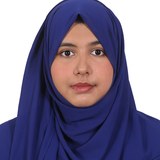 Mahmuda HoqueBRAC University
 Tasfia NawarNorth South University
 Md. Shakil AhamedMawlana Bhashani Science and Technology University
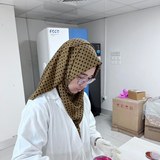 Rahnuma TabassumBiochemistry & Molecular BiologyJagannath University
 Fayez AhmadNotre Dame College, Dhaka
 Sabbir KhanGazipur Agricultural University
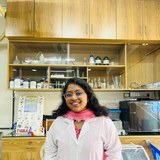 Lamisa Manha AditeeBRAC University
Collaborators
Ongoing research partnerships across microbiology, plant biotechnology, and computational oncology.
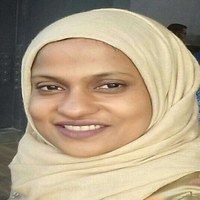 Dr. Syeda Tasneem TowhidAssociate ProfessorDepartment of Microbiology, Jagannath UniversityBangladeshScholar →
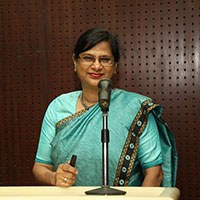
 Dr. Md. Salequl IslamProfessorDepartment of Microbiology, Jahangirnagar UniversityBangladeshScholar →
 Dr. Iqbal MahmudSenior Research ScientistDepartment of Bioinformatics and Computational Biology, MD AndersonUSAScholar →
 Dr. Yeon Ju KimAssociate ProfessorDepartment of Convergent Biotechnology & Advanced Materials Science, Kyung Hee UniversitySouth KoreaScholar →
If you have a dataset, a clinical question, or a study that would benefit from bulk / single-cell / spatial re-analysis or ML modelling, get in touch.
Start a conversation →